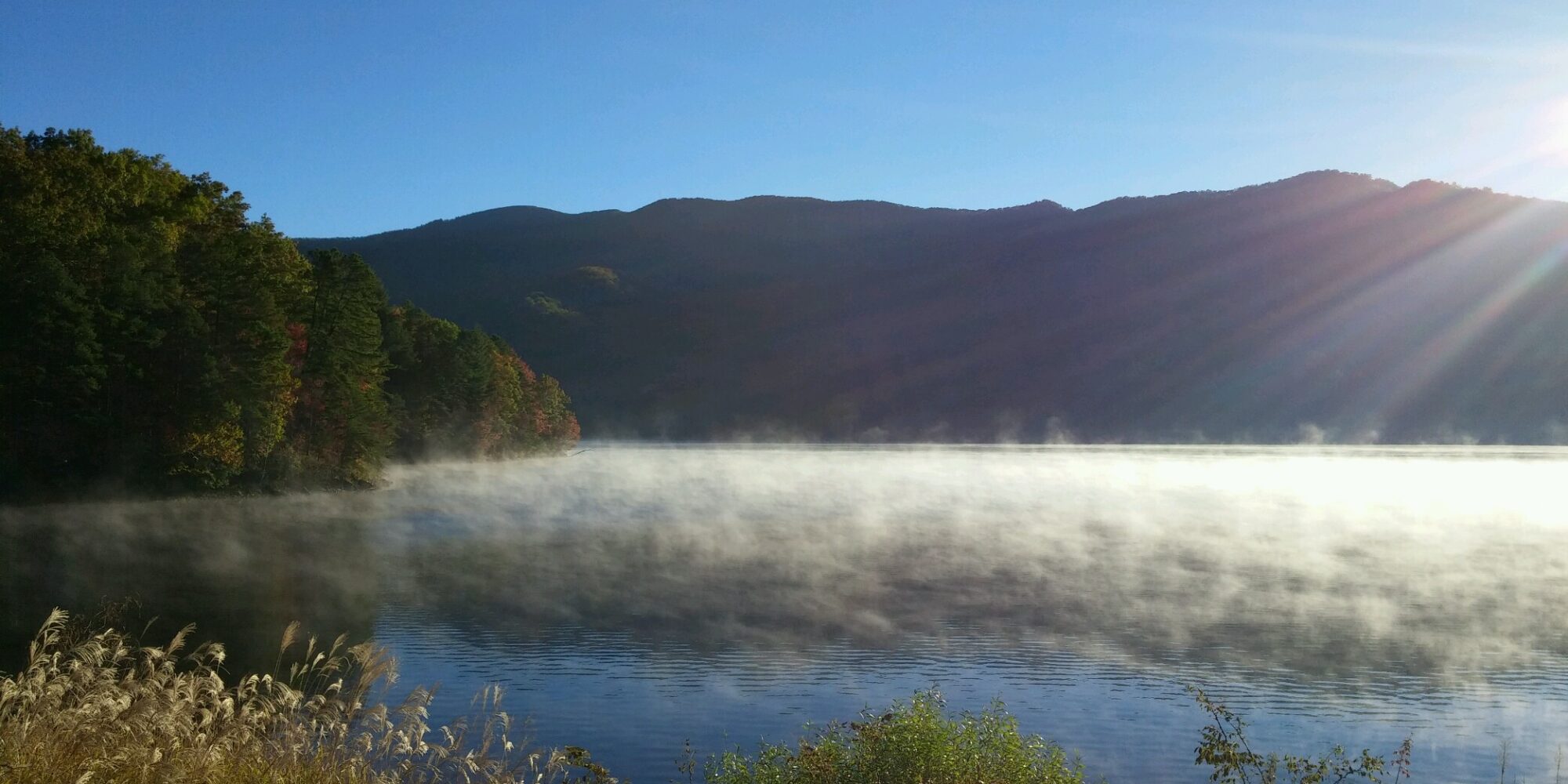
Water Quality Report Last updated or reviewed on March 9, 2026 City of Asheville Water Resources Department 2025 Annual Water Quality Report (February) Brochure for Print: Water Quality Report 2025 PWSID# NC0111010 Our Commitment to Quality We are pleased to present this year’s Annual Drinking Water Quality Report. This report is a snapshot of last year’s water quality. Included are details about your source(s) of water, what it contains, and how it compares to standards set by regulatory agencies. Our constant goal is to provide you with a safe and dependable supply of drinking water. We want you to understand the efforts we make to continually improve the water treatment process and protect our water resources. We are committed to ensuring the quality of your water and to providing you with this information because informed customers are our best allies. If you have any questions about this report or your water, please contact Water Resources Customer Service at (828) 251-1122. Customer Input Welcome We invite our customers to learn more about the City of Asheville and the Water Resources Department. Customers are invited to attend Asheville City Council meetings that are held in-person in the Council Chamber, on the Second Floor of City Hall, located at 70 Court Plaza, typically at 5:00 p.m. on the second and fourth Tuesday of every month. They are televised live on Charter/Spectrum Channel 193. The City of Asheville also posts City Council Meetings on the City of Asheville YouTube Channel for easier viewing. The Asheville City Channel is on Charter Cable channel 193 and on AT&T U-Verse channel 99. The council meetings may be watched live on the Engagement Hub. What EPA Wants You to Know Drinking water, including bottled water, may reasonably be expected to contain at least small amounts of some contaminants. The presence of contaminants does not necessarily indicate that water poses a health risk. More information about contaminants and potential health effects can be obtained by calling the Environmental Protection Agency’s Safe Drinking Water Hotline (800) 426-4791. Some people may be more vulnerable to contaminants in drinking water than the general population. Immuno-compromised persons such as persons with cancer undergoing chemotherapy, persons who have undergone organ transplants, people with HIV/AIDS or other immune system disorders, some elderly, and infants can be particularly at risk from infections. These people should seek advice about drinking water from their health care providers. EPA/CDC guidelines on appropriate means to lessen the risk of infection by Cryptosporidium and other microbial contaminants are available from the Safe Drinking Water Hotline (800) 426-4791. The sources of drinking water (both tap water and bottled water) include rivers, lakes, streams, ponds, reservoirs, springs and wells. As water travels over the surface of land or through the ground, it dissolves naturally-occurring minerals and, in some cases, radioactive material, and can pick up substances resulting from the presence of animals or from human activity. Contaminates that may present in source water include: Microbial Contaminants: such as viruses and bacteria, which may come from sewage treatment plans, septic systems, agricultural livestock operations and wildlife. Inorganic Contaminants: such as salts and metals, which can be naturally occurring or result from urban stormwater runoff, industrial or domestic wastewater discharges, oil and gas production, mining, or farming. Pesticides and Herbicides: which may come from a variety of sources such as agriculture, urban stormwater runoff, and residential uses. Organic Chemical Contaminants: including synthetic and volatile organic chemicals, which are by-products of industrial processes and petroleum production, and can also come from gas stations, urban stormwater runoff, and septic systems Radioactive Contaminants: which can be naturally-occurring or be the result of oil and gas production and mining activities. In order to ensure that tap water is safe to drink, EPA prescribes regulations which limit the amount of certain contaminants in water provided by public water systems. FDA regulations establish limits for contaminants in bottled water, which must provide the same protection for public health. Lead in Drinking Water Lead can cause serious health problems, especially for pregnant women and young children. Lead in drinking water is primarily from materials and components associated with service lines and home plumbing. The City of Asheville is responsible for providing high-quality drinking water and removing lead pipes, but cannot control the variety of materials used in plumbing components in your home. You share the responsibility for protecting yourself and your family from the lead in your home plumbing. You can take responsibility by identifying and removing lead materials within your home plumbing and taking steps to reduce your family’s risk. Before drinking tap water, flush your pipes for several minutes by running your tap, taking a shower, doing laundry or a load of dishes. You can also use a filter certified by an American National Standards Institute accredited certifier to reduce lead in drinking water. If you are concerned about lead in your water and wish to have your water tested, City of Asheville Water customers can pick up free lead test kits at Asheville City Hall on the first floor at the Water Customer Service window. Hours of operation are Monday – Friday from 9:00 am – 5:00 pm, except for holidays. We have been working for several years to identify service line materials throughout the water system and prepared an inventory of all service lines in our water system. To access the inventory, visit the Lead Awareness Page and click the link under the Service Line Inventory Dashboard section and report their service line material or schedule an appointment for a water employee to visit their home to determine their service line material. Customers without internet access can call (828) 251-1122 to request an appointment. When You Turn on Your Tap, Consider the Source The City of Asheville has three main water sources. In eastern Buncombe County are two pristine reservoirs that are surrounded by 20,000 acres of protected mountain forests owned by the City of Asheville. These reservoirs are known as the North Fork and Bee Tree Reservoirs located in Black Mountain and Swannanoa, respectively. They are the water sources for the North Fork and William Debruhl Water Treatment Facilities. These treatment facilities provide water to the majority of the City of Asheville distribution system. Mills River treatment facility is located in Henderson County, with 75 percent of the watershed being in the Pisgah National Forest. The rest of the watershed is a mixture of farmland and low-density development. The Mills River Facility also has an intake on the French Broad River in Henderson County. This intake would only be used during extreme drought conditions or if the Mills River water quality was affected by a fire or chemical release upstream of the Mills River intake. Source Water Assessment Program (SWAP) Results North Carolina Department of Environmental Quality, Public Water Supply Section, Source Water Assessment Program (SWAP) conducted an assessment of the drinking water sources across North Carolina. The purpose of the assessment was to determine the susceptibility of each drinking water source to Potential Contaminant Sources (PCSs). The results of the assessment are available in SWAP Assessment Reports that include maps, background information and a relative susceptibility rating of Higher, Moderate, or Lower. The relative susceptibility rating of each source for the City of Asheville was determined by combining the contaminant rating (number and location of PCSs within the watershed) and the inherent vulnerability rating (geologic characteristics of the surface water source and the watershed area). The assessment findings are summarized below: Susceptibility of Sources of Potential Contaminant Sources (PCSs) Source Name Susceptibility Rating North Fork Reservoir Higher Mills River Moderate Bee Tree Reservoir Moderate French Broad River* Higher (Found in SWAP Report Table 2, dated September 9, 2020) *French Broad River Intake is only used during extreme drought conditions. It is important to understand that a susceptibility rating of Moderate or Higher does not imply poor water quality, only the systems’ potential to become contaminated by PCSs in the assessment area. The complete SWAP Assessment report for the City of Asheville’s Water Resources Department may be viewed on the Web at https://www.ncwater.org/?page=600 and search “NC0111010”. To obtain a printed copy of this report, please mail a written request to: Source Water Assessment Program – Report Request, 1634 Mail Center, Raleigh NC 27699-1634, or email request to swap@deq.nc.gov. Please indicate the system name (City of Asheville), PWSID (01-11-010), and provide your name, mailing address and phone number. If you have any questions about the SWAP report please contact the Source Water Assessment staff by phone at (919) 707-9098. Accomplishments & Achievements The Advanced Metering Infrastructure (AMI) Project that started in March 2023 is now completed. The new WaterSmart portal is now available to customers that allows them to set alerts for leaks and monitor their water consumption. Over 2000 customers participated in the Service Line Inspection program in 2025 to help decrease the number of unknown service lines in the City of Asheville Service Line Inventory. To participate or learn more please call (828) 259-5962 or visit our Lead Awareness page. Mills River Phase II construction work began to add new infrastructure to the southern portion of our system. Design contracts secured for Pretreatment for the William DeBruhl and North Fork Water Treatment Facilities. This is an important first step in the process to make our water treatment facilities more resilient. Completed approximately 50% of construction on Water Distribution Project # 1, Phase 2; McDowell St water main replacement. The project consists of replacing approximately 6,650 LF of 12-inch ductile iron pipe located along McDowell St and Short McDowell St between Southside Ave and Meadow Road. Supported and advanced the development of a project for a new transmission main for the North Fork Water Treatment Plant. The project is being pursued as part of FEMA’s Hazzard Mitigation Grant Program and is intended to route critical transmission mains away from areas that have been significantly impacted by flooding and landslides in previous storm events. Key to Unit Abbreviations Action Level (AL) = The concentration of a contaminant that triggers treatment or other requirements that a water system must follow. Herbicide = Any chemical(s) used to control undesirable vegetation. Locational Running Annual Average (LRAA) = The average of sample analytical results for samples taken at a particular monitoring location during the previous four calendar quarters under the Stage 2 Disinfectants and Disinfection Byproducts Rule. Maximum Contaminant Level (MCL) = The highest level of a contaminant that is allowed in drinking water. MCLs are set as close to the MCLGs as feasible using the best available treatment technology. Maximum Contaminant Level Goal (MCLG) = The level of a contaminant in drinking water below which there is no known or expected risk to health. MCLGs allow for a margin of safety. Maximum Residual Disinfectant Level Goal (MRDLG) = The level of a drinking water disinfectant below which there is no known or expected risk to health. MRLDLGs do not reflect the benefits of the sue of disinfectants to control microbial contaminants. Maximum Residual Disinfectant Level (MRDL) = The highest level of a disinfectant allowed in drinking water. There is convincing evidence that addition of a disinfectant is necessary for control of microbial contaminants. Not-Applicable (N/A) = Information not applicable/not required. Nephelometric Turbidity Unit (NTU) = Nephelometric Turbidity Unit is a measure of the clarity of water. Turbidity in excess of 5 NTU is noticeable to the average person. Parts per Billion (ppb) or Micrograms per liter (µg/L) = One part per billion corresponds to one minute in 2,000 years, or a single penny in $10,000,000. Parts per Million (ppm) or Milligrams per liter (mg/L) = One part per million corresponds to one minute in two years or a single penny in $10,000. su = Standard Units Pesticide = Generally, any substance or mixture of substances intended for preventing, destroying, repelling, or mitigating any pest. Running Annual Average (RAA) = The average of sample analytical results for samples taken during the previous four calendar quarters. Treatment Technique (TT) = A required process intended to reduce the level of a contaminant in drinking water. < = Less than The City of Asheville’s Water Resources Department PO Box 7148, Asheville, NC 28802 Approved by NCDEQ: February 04, 2026 Water Quality Data Tables of Detected Contaminants We routinely monitor for over 150 contaminants in your drinking water according to Federal and State laws. The tables below list all the drinking water contaminants that were detected in the last round of sampling for each particular contaminant group. The presence of contaminants does not necessarily indicate that water poses a health risk. The data presented in this table is from testing performed January 1 through December 31, 2025. Stage 2 Disinfection Byproducts (DBPs) Total Trihalomethanes (TTHM) and Haloacetic Acids (five) (HAA5) Contaminant (Units) Sample Date MCL Violation (Y/N) Your Water (highest LRAA) Range (Low to High) MCLG MCL Likely sources of contamination *Total Trihalomethanes (TTHMS) ppb 2025 No B01-68 8-63 N/A 80 By products of drinking water disinfection **Haloacetic Acids (HAA5) ppb 2025 No B07-52 7-34 N/A 60 Lead and Copper Contaminants The table below summarizes our most recent lead and copper tap sampling data. If you would like to review the complete lead tap sampling data, please email us at leadprevention@ashevillenc.gov or call (828) 251-1122. We have been working to identify service line materials throughout the water system and prepared an inventory of all service lines in our water system. To access this inventory, visit the Service Line Inventory page Contaminant (Units) Sample Date Your Water (90th Percentile) Number of sites above the AL Range (Low to High) MCLG AL Likely sources of contamination Copper (ppm) 90th Percentile Jan – Jun 2025 0.056 0 <0.050 – 0.365 1.3 AL = 1.3 Corrosion of household plumbing systems; erosion of natural deposits Lead (ppb) 90th Percentile Jan – Jun 2025 <3 0 <3 – 14 0 AL = 15 Copper (ppm) 90th Percentile * Jul – Dec 2025 0.058 0 <0.050-0.121 1.3 AL = 1.3 Lead (ppb) 90th Percentile * Jul – Dec 2025 <3 0 <3 – 7 0 AL = 15 Disinfectant Rule Summary Contaminant (Units) MRDL Violation (Y/N) Your Water (RAA) Range Low – High MCLG MCL Likely source of contamination Chlorine (ppm) No 1.21 0.32-1.88 4 4.0 Water additive used to control microbes Turbidity* Contaminant (Units) Treatment Technique (TT) Violation (Y/N) Your Water MCLG Treat Technique (TT) Violation if: Likely Source of Contamination Turbidity (NTU) No 0.39 N/A Turbidity >1 NTU Soil runoff Turbidity (%) – Lowest monthly percentage of samples meeting turbidity limits No 99.4% N/A Less than 95% of monthly turbidity measurements are < 0.3 NTU *Turbidity is a measure of the cloudiness of the water. It is monitored because it is a good indicator of the effectiveness of our filtration system. The turbidity rule requires 95% or mor of the monthly samples must be less than or equal to 0.3 NTU. Total Organic Carbon (TOC) Contaminant (Units) MRDL Violation (Y/N) Your Water (RAA) Range Low – High MCLG Total Organic Carbon (TOC) Removal Ratio (no units) No 1.00 1.00 – 2.86 N/A 2025 Physical and Mineral Characteristics The following constituents analyzed in your water are indicators of the appearance, taste, and mineral content of the drinking water delivered to your tap. Constituent Annual Average pH (SU) Alkalinity (ppm) Hardness (ppm) 7.61 23.82 5.52 Water Quality Reports from Previous Years Water Quality Report 2024 Spanish Ukrainian Russian Water Quality Report 2023 Spanish Ukrainian Russian Water Quality Report 2022 Spanish Ukrainian Russian Water Quality Report 2021