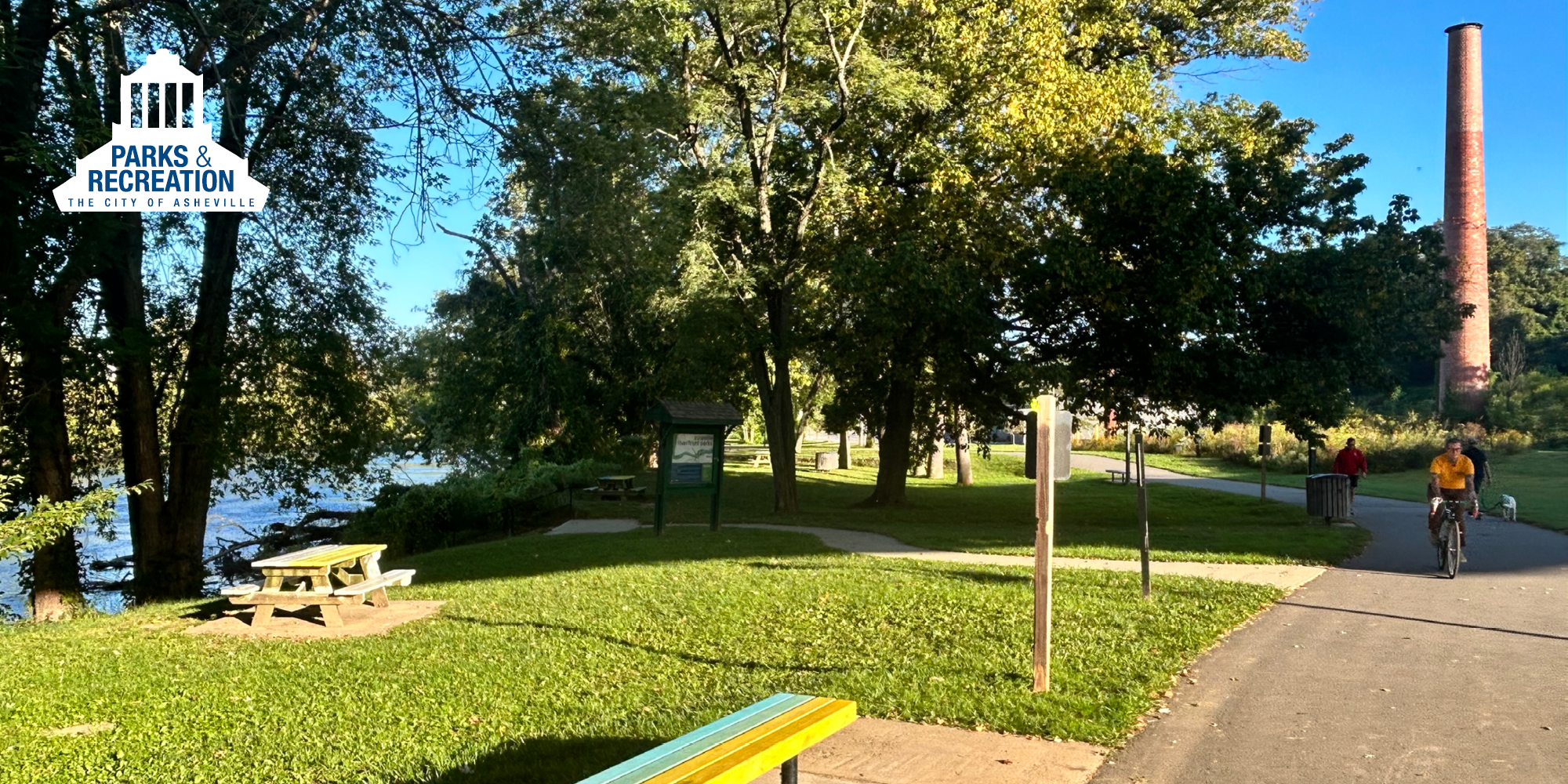
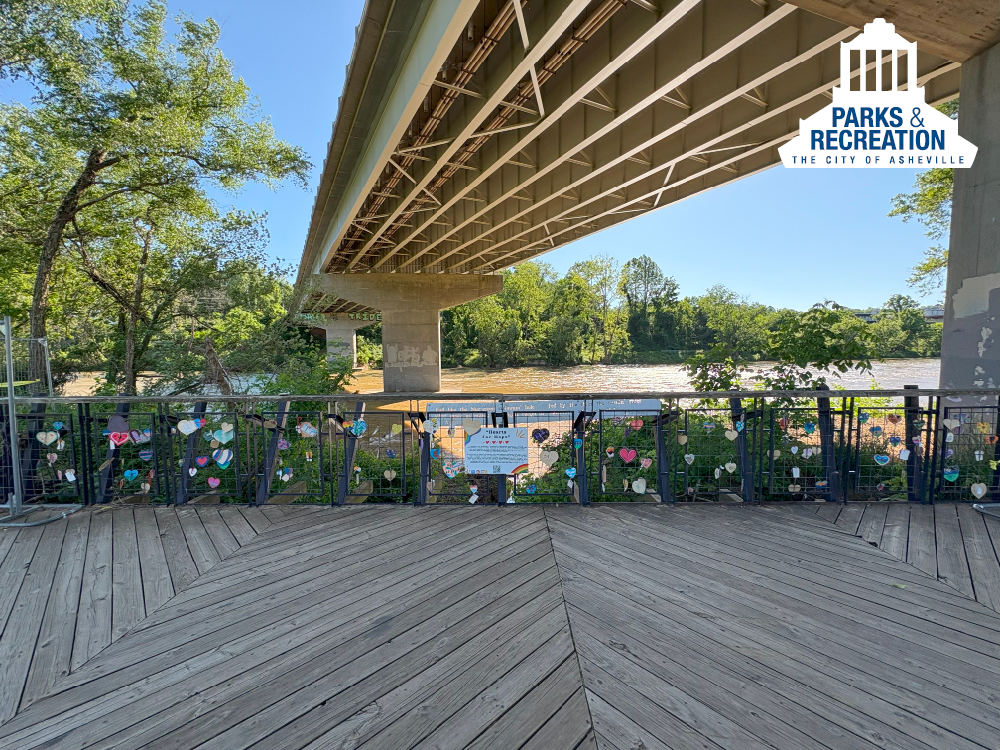
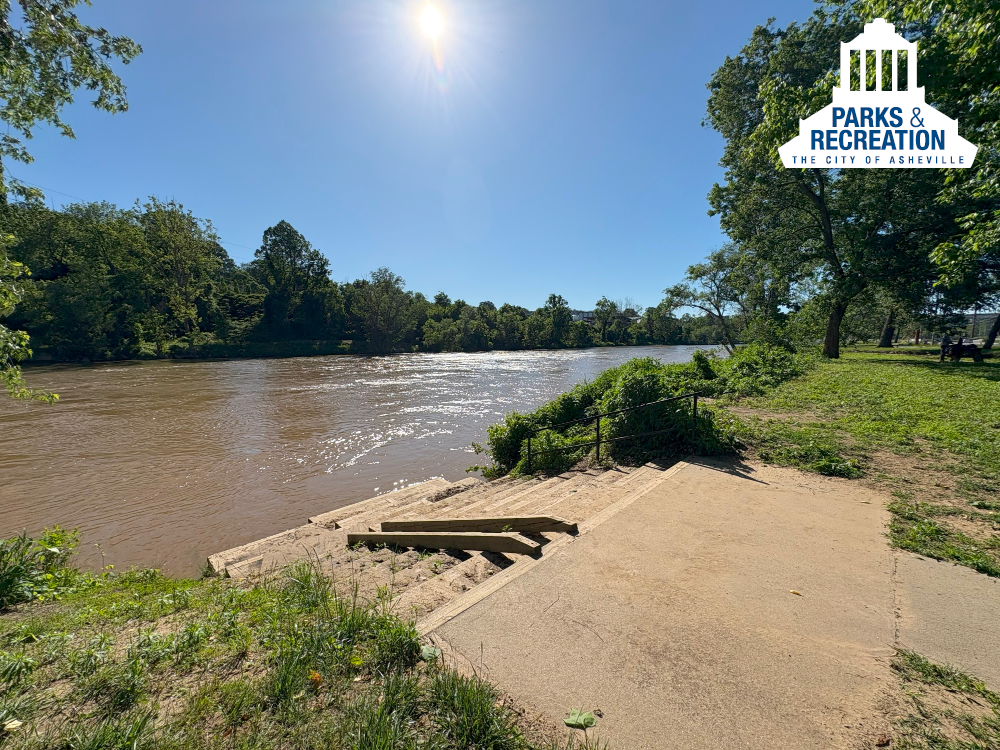
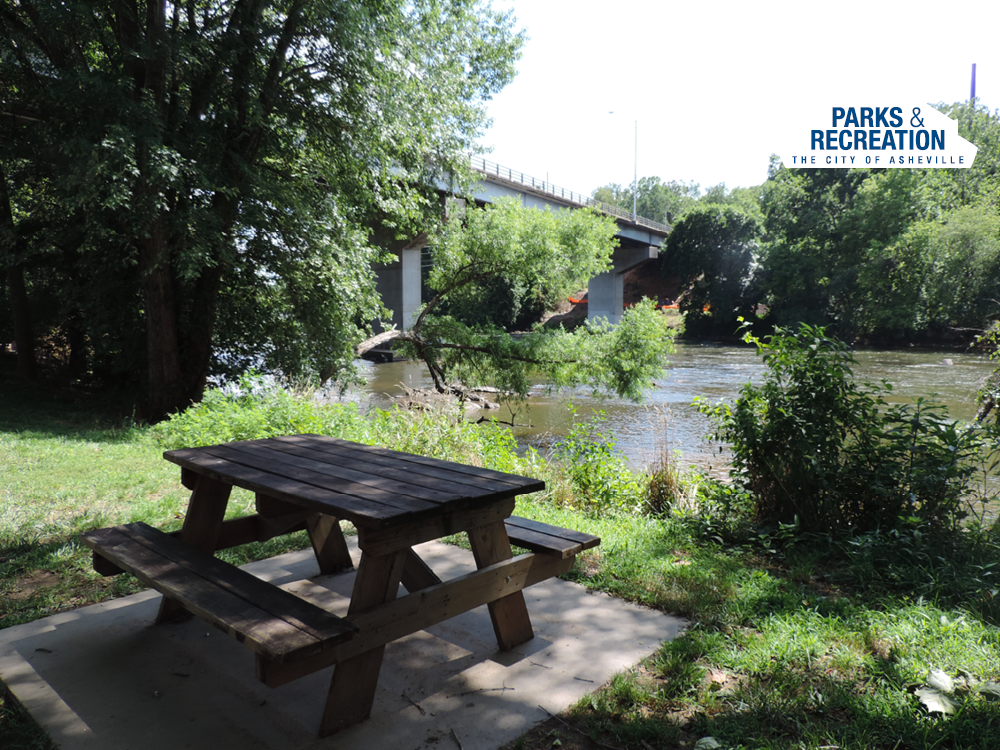
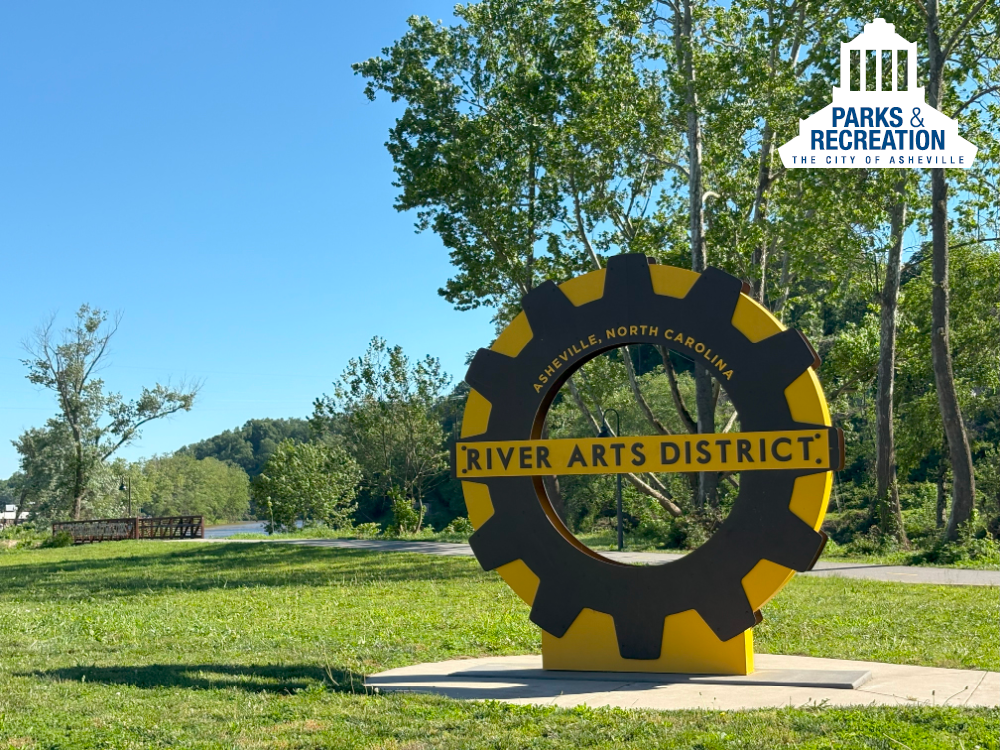
A little park with river access and benches is tucked under the Haywood Road bridge bearing the name of an Asheville native and river visionary.
Excitement is Building
For the latest on recovery efforts at this location, visit the French Broad Riverfront Parks Recovery project page
Features
- Greenway access
- River access
- Off-street parking lot
- Wheelchair accessible
Parties and Rentals
History
Parks and river walks along Asheville’s urban waterfront increase social equity, drive economic opportunities, and act as adaptable and sustainable infrastructure in the face of climate change. They enhance water quality, prevent flooding, improve air quality, provide vegetative buffers to development, maintain the urban tree canopy, and produce habitats for wildlife while allowing residents places to explore, connect, and discover close to home.
A River Runs Through It
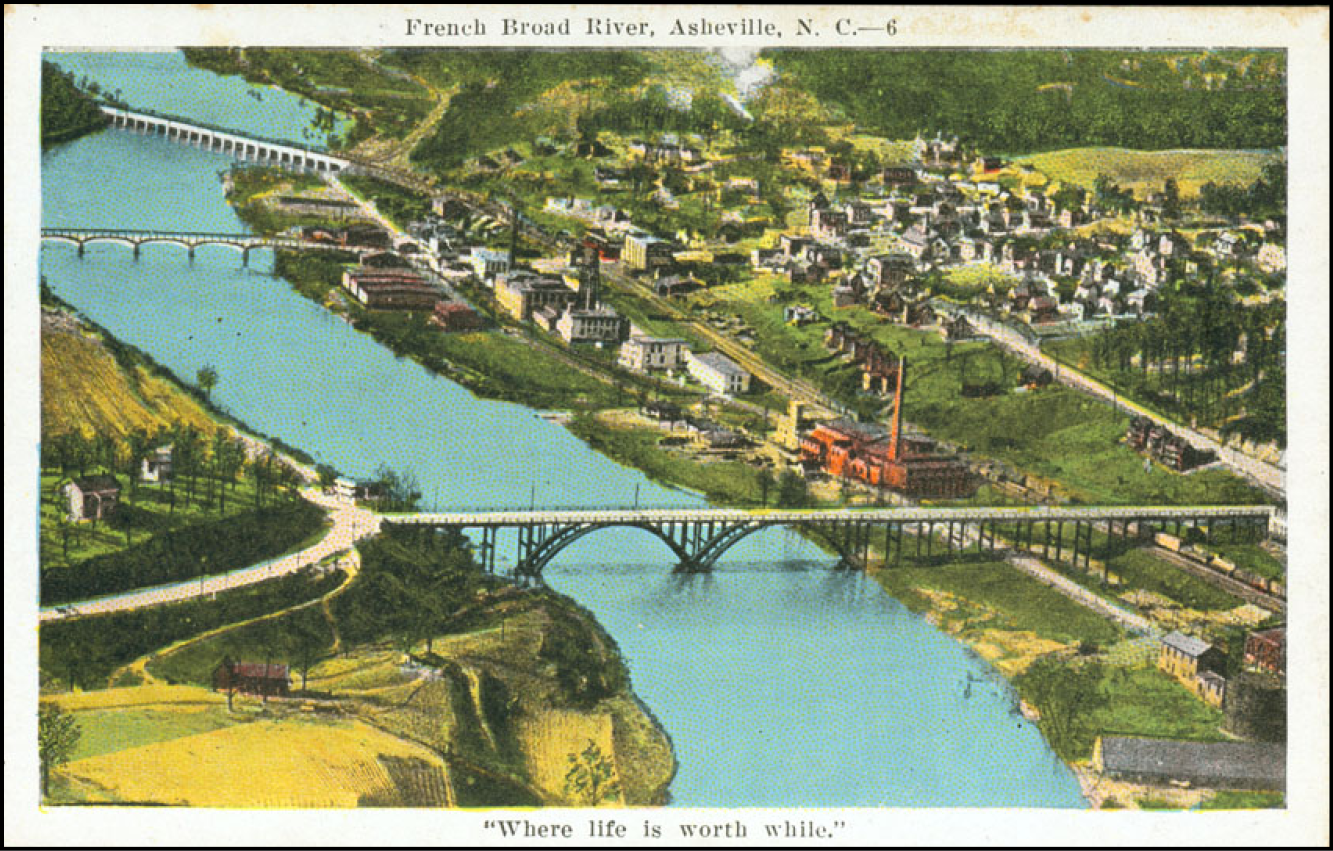 The French Broad and Swannanoa rivers have hosted recreation experiences for thousands of years. ᏙᎩᏯᏍᏗ (Togiyasdi, “the place where they race”) was the name given to the joining of the two rivers by the Cherokee people as they built towns and villages, complete with meeting plazas, hunting grounds, and courts for ball play along the riverbanks. Carrier’s Field and Riverside Park, two of Asheville’s earliest parks, were built on the riverfront in 1892 and 1904.
By the 1950s, population growth and river district industrialization turned the French Broad into an open sewer with floating garbage, landfill seepage, and chemical runoff, documented in Wilma Dykeman’s The French Broad. As the United States Bicentennial approached, interest in cleaning up the French Broad gained support. Buncombe County qualified for federal funds through the Public Works and Economic Development Act of 1965 to expedite the rehabilitation process because the river’s sad state was linked to economic distress and persistent unemployment.
Groups including Quality Forward (predecessor to Asheville GreenWorks) harnessed community members and equipment donated by local industries to clear the French Broad and Swannanoa rivers of numerous car bodies, tires, appliances, and other interesting debris. At the same time, Land of Sky Regional Council used a small grant from Tennessee Valley Authority (TVA) to prepare a riverfront development strategy to support short- and long-term goals.
In the late 1970s, only one riverside park had been developed for public use in Buncombe County, Sandy Bottoms-Bent Creek Park. The lack of public access to the river was a major problem for recreational canoeists, hunters, and people looking to fish. Often, they would find themselves trespassing on private lands to reach the water. Without trash bins and public parking, litter and vandalism was an unfortunate result.
The first French Broad River Recreation Access Plan debuted in 1977 with an emphasis on basic access sites, hiking trails, and public parks, along with streambank stabilization and erosion control. Since that time, Asheville Parks & Recreation (APR) has added large and small parks, greenways, and natural areas along the city’s waterfront.
Jean Webb Park
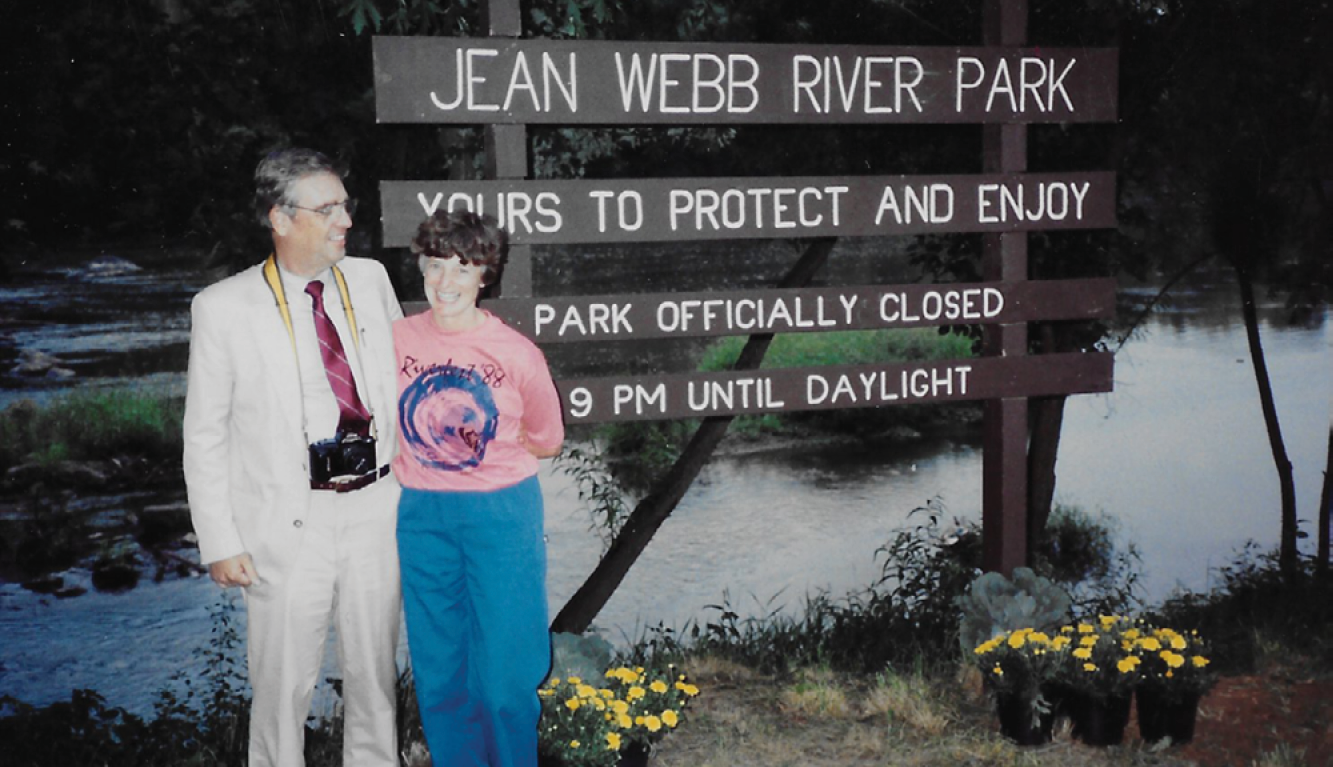 Asheville native Jean Webb served as Executive Director of Quality Forward from 1978 to 1983. These critical years set up a river rebound guided by her love of the French Broad and a hope that it could be the center of a clean, vibrant Asheville. Webb organized the community’s first river cleanup day guided by the belief that if people used and enjoyed the river, they would take care of it.
As president of French Broad River Foundation, Webb later helped organize Riverfest to support its mission, worked with City of Asheville and Buncombe County leaders to develop safe access to the river, and organized Streamwatch groups to monitor pollution. All these efforts began to make a difference and led to the formation of Riverlink.
When Jean Webb Park was officially dedicated on August 31, 1988, it joined six other public river access parks managed by Buncombe County Parks & Recreation. It later became part of the APR system and received major upgrades during the development of Wilma Dykeman Greenway. New amenities include covered paved parking, accessible benches and water viewing areas, an educational pollinator garden, safer water access steps downstream from the parking area, picnic areas, public art, expanded lawn spaces, and public restrooms across Riverside Drive in 8 River Arts Place.
Photo and Image Credits
- An aerial view of French Broad River (c. 1917-1930) shows the old West Asheville Bridge in the foreground with Smith Bridge and Southern Railway Bridge in the background. Craven Street Bridge BAA is south of Smith Bridge. Jean Webb Park is located north, south, and under the old West Asheville Bridge and the iconic chimney from an ice house can still be seen across Riverside Drive. Courtesy of Buncombe County Special Collections, Pack Memorial Public Library, Asheville, North Carolina.
- Jean Williamson Webb was all smiles when her namesake park opened – and with good reason. The park represented more than a decade of organizing to restore the French Broad to its former glory. She once said, “I am committed to this community. I just hope that people will realize the value of the beauty around us.” Her work, hope, and commitment transformed not only the river, but Asheville. Courtesy of Laura Webb.