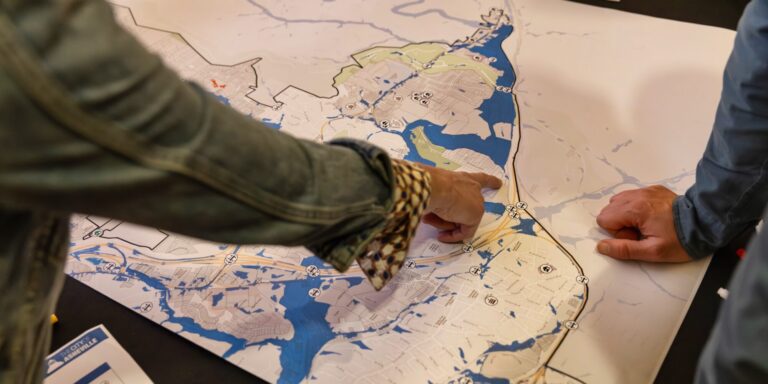
Participatory mapping work documents lessons from neighborhood Helene response
Based on key findings and recommendations from the Resilience Hub Mapping Project, the City of Asheville is now planning to use more than $2 million in federal Community Development Block Grant – Disaster Recovery (CDBG-DR) funds to invest in community facilities.
The City partnered with Thrive Asheville on the project, documenting how nonprofits, faith communities, government agencies and individual volunteers jumped in to help in the aftermath of Tropical Storm Helene. The project team looked at what worked well and what didn’t, to provide clear ideas for building a strong, community-led network in the future.
The final report, available at publicinput.com/resilienceAVL, shares key findings and recommendations, including both “overall” and city-led actions, providing many opportunities to improve daily connections and to prepare for the next disaster. An interactive GIS map displays data collected through the surveys, key informant interviews, and participatory mapping exercises. The report acknowledges the incredible work of the existing community of volunteers and organizations, finding that the network is real but fragile, and that many groups pitched in to reach more people and places.
One of the report’s recommendations, to invest in community-led hub facilities that provide year-round services and can respond during emergencies, is informing the City’s plan to direct available federal funds.
The City has set aside $2.125 million for resilience hubs as part of the CDBG-DR Infrastructure Program, funded by the U.S. Department of Housing and Urban Development. This unique funding opportunity allows for investment in privately-owned facilities and could fund specific site improvements that align with mapping project findings. Qualifying improvements could include things like resilient infrastructure for power and communications, landscape and site enhancements and Americans with Disabilities Act (ADA) improvements. The City is also looking to reduce the administrative and operational burden on facilities by offering multiple pathways to funding.
“This is a once in a lifetime opportunity to invest in Asheville’s resilience for generations to come,” said Bridget Herring, Director of the City’s Office of Recovery and Resilience. “Looking at what we’ve learned about the many different places and people doing this work, we are working to open multiple doors to access this funding.”
City staff are developing criteria, seeking and incorporating feedback from City boards and committees and working to prepare the “Notice of Funding Opportunities” (NOFO) in late summer. Prospective applicants can expect to see the NOFO published as early as Fall/Winter of 2026, with awards in Spring of 2027.
To read the report, explore the map, learn more about the project, or sign up for updates, visit publicinput.com/resilienceAVL.