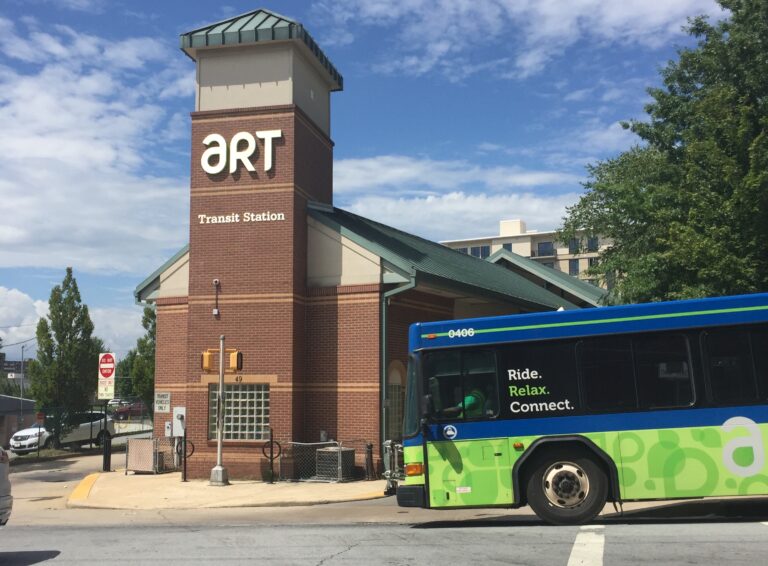
The City of Asheville is seeking public input on a proposed future network of routes for the Asheville Rides Transit (ART) bus network. Based on previous public feedback and City Council direction, the draft network is designed to encourage higher ridership by improving many routes to have higher-frequency service, including 15-minute service on some routes. However, achieving these ridership-focused outcomes requires removing service from some areas in order to reallocate resources..
Over the next five weeks, City staff will be seeking input from the community on the draft network. There are a number of ways to provide this input. In addition to the online survey, City Staff and our consultant team partners will talk with passengers at the ART transit station, and attend numerous community meetings to discuss the proposed changes.
The draft network is part of the ART Comprehensive Operational Analysis, a project begun in March of 2025 with consultants Jarrett Walker and Associates to identify ways the City can improve public transit service and better align resources with community needs. A first round of engagement from April to June of 2025 gathered community input on transit needs and preferences (View engagement summary). A second round, completed in October 2025, sought input on the competing goals of increased ridership and geographic coverage of more areas. (View engagement summary).
As a result of the input from the community, conversations with stakeholder groups, and analyses conducted for the project, the City Council requested that staff and consultants develop a draft network that moved slightly in the direction of increasing ridership, while ensuring public housing and neighborhoods where residents are lower-income and more dependent on transit would retain coverage.
In the draft network, areas where residents have lower incomes continue to have service, and the proposed network provides greater access to frequent transit and enhanced job access for both residents with lower incomes and residents of color. Some existing service is removed in the draft network to allow better service on heavily-travelled routes, in some cases increasing frequency to every 15 minutes. The draft network would also improve on-time performance by creating shorter transfer times at the ART Transit Center and straightening or modifying routes to improve travel time.
This final round of public engagement closes the loop with the community, showing how public feedback over the last year has been incorporated and allowing the City to ask “what did we miss?”
Staff provided the City Council with an overview of the draft network on May 21 during the Council Agenda Briefing. The engagement conducted during May and June will culminate in final modifications to the draft network in order to produce a final network and report. Staff will brief the City Council on the resulting public input from this period in late July. A presentation of the final network and report is expected in late summer. If it is determined to move forward with the final network, no changes to the system would happen immediately, but could begin in the summer of 2027.
“Ultimately this study effort is focused on the community’s investment in transit, and making sure we get the most out of that investment by improving the experience for people who depend on transit service to move through our city,’ said Ashley Haire, the City’s Transportation Director.