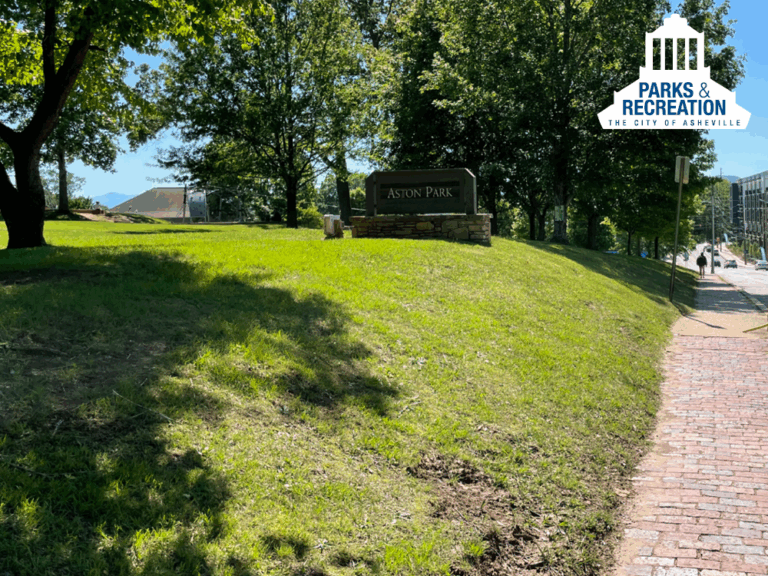
UPDATE December 2 at 9:30 a.m.: A controlled burn planned near Aston Park for Wednesday, December 3, 2025, has been postponed. A new date has not been determined, but the Asheville Fire Department will alert the media, surrounding residents, and businesses within 48 hours of the new date via AVL Alerts.
The Asheville Fire Department (AFD), in partnership with Asheville Parks & Recreation (APR), will conduct a controlled burn near Aston Park on City-owned property, on Wednesday, December 3, 2025. If the weather is not optimal, we will send a notice the night before for rescheduling. The burn will take place on one day between 10 a.m. and 4 p.m., with the exact date selected based on weather conditions and safety requirements. Controlled burns are one of multiple tools APR uses to keep Asheville’s parks beautiful, healthy, and thriving for people, plants, and animals.
AFD will send a notification through AVL Alert approximately 48 hours before the burn takes place. Community members are encouraged to subscribe to AVL Alert to receive timely updates and emergency notifications.
During the burn, the most noticeable impact will be a brief period of visible smoke. AFD has developed a detailed smoke management plan to minimize the impact on air quality and visibility. The burn will only proceed when weather conditions meet strict safety parameters.
For the safety of our community and crews, temporary safety perimeters and public access restrictions will be in place. Portions of the park or nearby trails may be closed for the duration of the burn.
Why is the controlled burn being conducted?
Controlled burns are a long-standing, science-based tool used to maintain healthy meadow and pollinator habitats—like those found in Aston Park. Learn more on how APR manages meadow and pollinator habitats here.
This planned controlled burn will help:
- Reduce built-up fuel loads that could otherwise increase wildfire risk
- Prevent woody overgrowth that can overwhelm meadows
- Promote the growth of native plants and wildflowers
- Improve soil health and support pollinator species
- Provides a training opportunity for AFD to manage unplanned fires
AFD follows a series of established steps to ensure each operation is safe, effective, and aligned with ecological goals:
Planning & Permitting
- Burn Plan Development: Staff develop a detailed burn plan for each site, including objectives, weather thresholds (such as wind speed and humidity), ignition patterns, resource assignments, and contingency actions.
- Permitting: AFD secures all required permits through local and state agencies, such as the NC Forest Service and regional air quality regulators.
- Notifications: AFD, APR, and Communication and Public Engagement coordinate communication to nearby residents, businesses, and emergency services through text alerts, social media, press releases, and other outreach tools.
Execution
- Weather Monitoring: Burns only occur when on-site conditions fall within the prescription parameters to ensure safety and effectiveness.
- Trained Personnel: AFD leads all fire execution, including ignition and suppression. APR staff assist with preparation and support
- Fire Breaks: Crews establish and maintain designated fire breaks around the burn area.
- Public Safety: Temporary closures and safety perimeters are set up to keep the public at a safe distance.
- Smoke Management: AFD implements the smoke management plan to minimize visibility issues and air quality impacts.
After the Burn
Once the burn is complete, staff will monitor the area to track native plant regeneration, identify any re-sprouting invasive species, and assess overall habitat recovery.